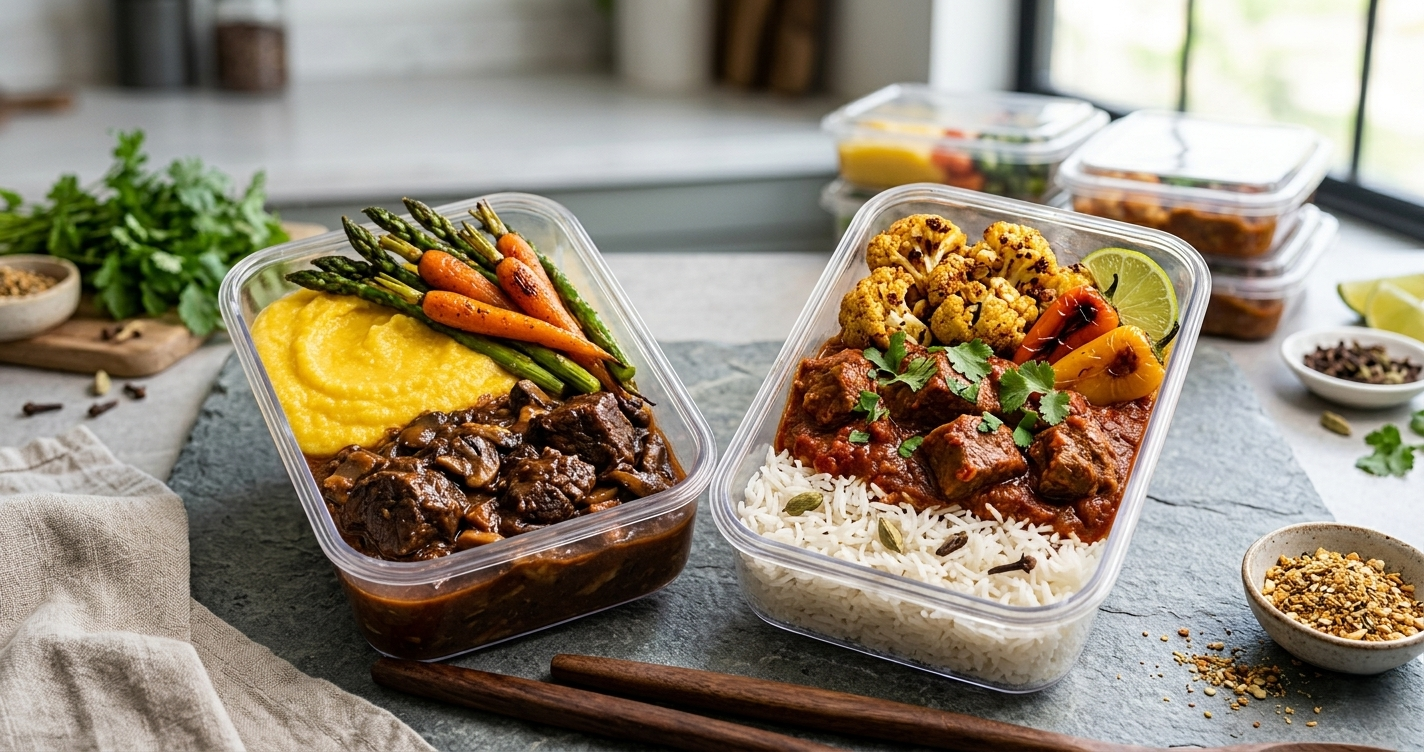
Guaranteed Profit! Unveil the Secret Formula for Pricing Fit Meal Prep and Multiply Your Earnings NOW!
Do you dream of turning your passion for healthy food into a profitable business? Fit meal prep is all the rage, and the demand for tasty, nutritious options is only growing. However, many entrepreneurs in the healthy food sector—whether in fit meal prep, healthy baking, salad jars, protein snacks, or healthy catering—face a major challenge: pricing. A poorly calculated price can mean the difference between a thriving business and one struggling to survive. But what if there were a secret formula to guarantee profit? In this comprehensive guide, we will unveil the secrets of pricing fit meals and show you how to multiply your earnings. Get ready to master the art of pricing your products and reap the rewards of your hard work!
Veja também: Carne ao Molho Branco com Aipim
Veja também: Batata Recheada com Queijo e Bacon
The Pillars of Profitable Fit Meal Pricing
Before we dive into formulas and calculations, it is essential to understand the pillars that support intelligent pricing. It is not just about covering costs, but about adding value, understanding the market, and maximizing your profit margin sustainably.
1. Direct Cost of Ingredients: The Foundation of Everything This is the starting point. Each ingredient used in your fit meal has an individual cost. It is essential to record the purchase price of each item and the quantity used per portion. Use a detailed spreadsheet to record:
-
Purchase price per kilogram/unit of the ingredient.
-
Quantity used in the recipe per meal (in grams, ml, units).
-
Exact cost of each ingredient per portion. Do not forget to include seasonings, oils, spices, and other items that, although in small quantities, add up to the final cost.
2. Indirect Costs: The “Invisibles” That Impact Your Profit Beyond ingredients, there are other costs that must be considered. They are called indirect because they are not directly tied to the production of a single meal, but are essential for your business to function:
-
Packaging: Containers, lids, labels, bags.
-
Labor: Your time for preparation, cooking, assembly, packaging, and delivery. If you have employees, include wages and benefits.
-
Utensils and Equipment: Depreciation of ovens, stoves, refrigerators, processors, pots.
-
Electricity and Gas: Essential for food preparation.
-
Water and Gas: Daily consumption.
-
Marketing and Sales: Costs for ads, social media, flyers.
-
Transportation: Fuel, vehicle maintenance, delivery apps.
-
Taxes and Fees: Municipal, state, and federal taxes.
-
Rent (if applicable): Physical space for production or storage. To calculate the indirect cost per meal, sum all these costs over a period (monthly, for example) and divide by the total number of meals produced in that same period.
3. Desired Profit Margin: The Heart of Your Business This is the percentage you want to earn on top of your total cost. A healthy profit margin is crucial for the growth of your business, allowing for reinvestments, unforeseen events, and, of course, your livelihood. For food businesses, margins of 30% to 50% are common, but this can vary depending on your target audience and the competition.
The Secret Pricing Formula: Step-by-Step
Now that we understand the components, let’s put them together into a practical formula:
Step 1: Calculate the Total Cost per Meal Sum the Direct Cost of Ingredients (Step 1) with the Indirect Cost per Meal (Step 2). Total Cost per Meal = Direct Ingredient Cost + Indirect Cost per Meal
Step 2: Define the Sale Price Apply the desired profit margin over the Total Cost per Meal. Sale Price = Total Cost per Meal / (1 – Desired Profit Margin in Decimal) Example: If the Total Cost per Meal is R$ 15.00 and you want a 40% (0.40) profit margin, the calculation would be: Sale Price = R$ 15.00 / (1 – 0.40) Sale Price = R$ 15.00 / 0.60 Sale Price = R$ 25.00
Step 3: Market Research and Adjustments This calculated price is an excellent starting point, but it is not the endpoint. It is crucial to research the price of competitors who offer similar products in terms of quality and quantity. If your price is significantly above average, re-evaluate your costs or your value proposition. If it is way below, you might be leaving money on the table. Also, consider the value perceived by the customer. A meal with organic ingredients, specialized preparation, or impeccable delivery service can justify a higher price.
Maximizing Your Earnings in Other Healthy Niches
The pricing formula does not only apply to fit meals. It is a versatile model that can be adapted to other areas of the healthy market:
-
Profitable Healthy Baking: For cakes, pies, desserts, and healthy sweets, the ingredient calculation can be more complex due to variations in size and specific ingredients (sweeteners, special flours). Pricing must consider the cost of each unit or slice, always with a profit margin that reflects the quality and artisanal work.
-
Profitable Salad Jars: Presentation and variety of ingredients are crucial. The cost of each jar must include not only the vegetables and proteins, but also dressings, grains, and the packaging itself, which is often a differentiator.
-
Protein Snacks for Resale: Protein bars, nut mixes, veggie chips. Pricing here must consider individual packaging or bulk packs, plus a production cost that allows a good margin for resellers.
-
Healthy Catering for Events: For events, pricing is generally done per person or per item and must include logistics costs, presentation, service staff (if applicable), and a profit that compensates for the complexity of large volumes and customization.
Common Pricing Mistakes and How to Avoid Them
-
Ignoring Indirect Costs: The most common and fatal mistake.
-
Not Updating Prices: With inflation, costs change. Review your pricing periodically.
-
Copying Competitors Without Analysis: Every business has its own costs and margins.
-
Undervaluing Your Work: Your time and expertise have value.
-
Not Calculating Desired Profit: Pricing just to “cover” costs does not generate growth.
Conclusion
Mastering the art of pricing is a game-changer for any healthy food business. The formula presented in this guide—Direct Cost + Indirect Cost / (1 – Desired Profit Margin)—is your secret tool to ensure that every fit meal, every healthy sweet, every salad jar, and every catering service not only covers your expenses but also generates a substantial and sustainable profit. Remember that pricing is not a static act; it is a continuous process that requires attention to detail, constant market research, and a deep understanding of the value you deliver to your customers. By diligently implementing this strategy, you will be on the right path to multiplying your earnings and solidifying your brand in the healthy food market.
It’s not just about selling food; it’s about building a profitable and rewarding business. By applying pricing principles consistently and intelligently, you ensure that your venture not only survives but thrives. Invest time in your spreadsheets, understand every cent spent and earned, and watch your business take off. Your journey to guaranteed profit starts with the correct pricing!