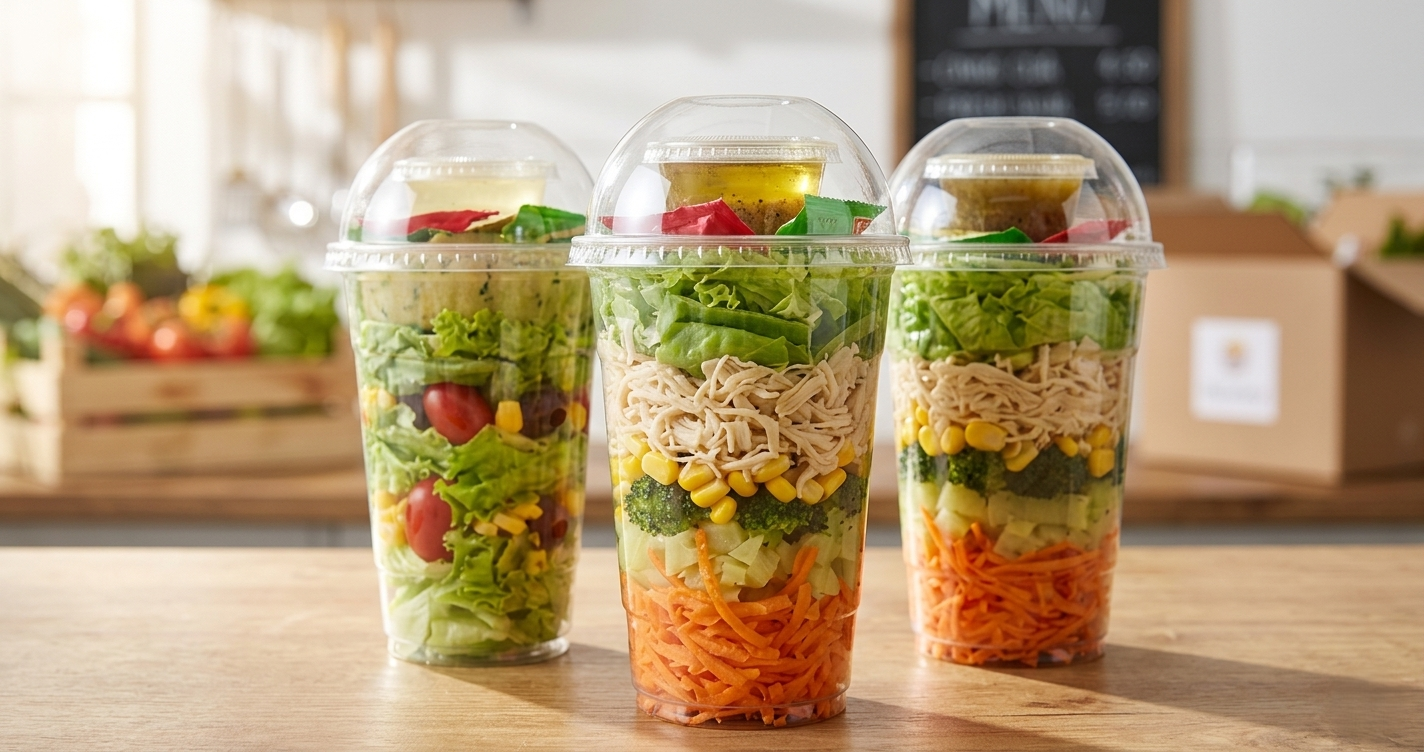
In the growing universe of healthy and practical food, salads in a jar have established themselves as an irresistible option for those seeking nutritious and convenient meals. Whether for a quick lunch at work, a post-workout snack, or a wellness-focused corporate event, the presentation and conservation of these dishes are crucial for success. That is where salad-in-a-jar packaging comes in—an element that goes far beyond simple food containment. They are the showcase of your business, the promise of freshness, and the demonstration of your commitment to sustainability and functionality.
In this definitive guide, we will dive into the world of packaging for salads in a jar, exploring the best options that will not only impress your customers but also ensure the quality and integrity of your products. We will cover everything from ideal materials to design tips and logistical aspects, focusing on how to optimize your operation to sell more and better, whether you are an entrepreneur in fit meals, fit confectionery, salads in a jar, protein snacks, or healthy catering.
Veja também: Carne ao Molho Branco com Aipim
Veja também: Batata Recheada com Queijo e Bacon
The Importance of the Right Packaging for Salads in a Jar
Well-chosen packaging for salads in a jar is a strategic investment. It directly impacts customer perception, ingredient durability, and consumption convenience. A visually appealing salad, with well-defined layers and fresh ingredients, is an invitation to purchase. Furthermore, the packaging must protect the food from contamination and leaks, while maintaining texture and flavor until the moment of consumption.
In an increasingly competitive market, where selling fit meals and profitable salads in a jar is a common goal, standing out is fundamental. Packaging is one of the first points of contact with the consumer and can be a powerful competitive differentiator. It communicates professionalism, care, and attention to detail—essential attributes for any healthy food business.
Sustainable Materials: The Future of Packaging
Concern for the environment is an undeniable trend and a decisive factor for many consumers. Opting for sustainable materials in salad-in-a-jar packaging is not just an ethical choice, but also a smart marketing strategy. Customers seeking healthy food often value ecological practices.
-
Recyclable and Recycled Plastic (PET, PP): Materials like PET (Polyethylene Terephthalate) and PP (Polypropylene) are widely used due to their transparency, resistance, and cost-benefit. It is crucial that they are food-grade and, whenever possible, sourced from recycled materials or easily recyclable after use.
-
Glass: Although heavier and with a higher risk of breakage, glass is an excellent option for those seeking a premium and fully reusable appeal. For audiences who value sustainability to the extreme, glass can be a major draw, especially if you offer a packaging return system.
-
Compostable/Biodegradable Paper and Cardboard: For components like lids or dividers, paper or cardboard materials with compostability or biodegradability certification are ideal. They decompose faster, minimizing environmental impact.
-
Bioplastics (PLA): Polylactic acid (PLA) is a bioplastic derived from renewable sources, such as corn starch. It is biodegradable under specific industrial composting conditions. It is an interesting alternative, but it is important to inform the customer about correct disposal.
When choosing sustainable materials, communicate this choice to your customers. Use seals, labels, or social media descriptions to highlight your business’s commitment to sustainability. This can strengthen your brand and attract a more conscious audience.
Functionality and Intelligent Design
Beyond sustainability, functionality is the key to practicality and customer satisfaction. Well-designed salad-in-a-jar packaging must:
-
Keep Layers Separate: The beauty of a salad in a jar lies in the visual organization of the layers. The packaging must allow for this separation, preventing moist ingredients (like tomatoes or dressings) from soaking the green leaves. Pots with internal dividers or the strategic use of dressing at the bottom are effective solutions.
-
Ensure Perfect Sealing: Leaks are a nightmare for any consumer. Opt for lids that offer a secure and firm seal, whether screw-top, pressure-fit, or induction-sealed. This also helps preserve food freshness.
-
Be Transparent and Appealing: Transparency allows the customer to see the quality and beauty of the salad. Choose materials that do not distort the image of the ingredients and allow for a clear and appetizing view.
-
Facilitate Consumption: The shape of the pot must be ergonomic to hold and eat from. A wide mouth facilitates the removal of ingredients with a fork.
-
Support Transport and Storage: The packaging must be sturdy enough to withstand handling during production, transport, and storage without deforming or breaking.
Design is also a crucial element. Personalized labels with your brand’s visual identity, clear nutritional information, and aesthetic appeal contribute to a memorable purchasing experience. Think about colors, fonts, and images that reinforce the concept of health and well-being in your business.
Packaging for Different Healthy Business Niches
Regardless of your focus—fit meals, fit confectionery, salads in a jar, protein snacks, or healthy catering—the choice of packaging must be aligned with your audience and value proposition.
-
Profitable Fit Meals and Salads in a Jar: For those focusing on complete and practical meals, functionality and capacity are essential. Larger pots that can hold a balanced meal, with a good seal to prevent leaks in bags and backpacks, are ideal. Transparency is a great ally to show the variety and quality of ingredients.
-
Profitable Fit Confectionery: Fit sweets, such as jar cakes, mousses, and tarts, require packaging that highlights the beauty and texture of the desserts. Pots with elegant shapes, lids that allow for good visualization, and that guarantee hygiene are fundamental. Materials that do not react with the sweets and that maintain the proper temperature are also important.
-
Protein Snacks for Resale: For protein snacks, such as nut mixes, dried fruits, or homemade bars, individual, practical, and well-sealed packaging is ideal for on-the-go consumption. The packaging can communicate the nutritional benefits of the snack and the brand identity.
-
Healthy Catering for Events: In healthy catering, presentation is paramount. Individual and elegant packaging that maintains the integrity of the dishes during transport and impresses guests is key. Glass jars with personalized lids or well-planned divided boxes can elevate the experience.
Extra Tips to Optimize Your Packaging
-
Personalization: Invest in custom labels with your brand logo, contact information, ingredients, and expiration dates. Unique packaging strengthens your brand recognition.
-
Clear Information: Be transparent about the materials used and disposal instructions. This demonstrates responsibility and educates the consumer.
-
Logistics: Consider stacking and transport. Packaging that fits well and is stable facilitates handling and reduces losses.
-
Cost-Benefit: Find a balance between quality, sustainability, and price. The cheapest option is not always the best in the long run.
Conclusion
Salad-in-a-jar packaging is much more than a simple container; it is an ambassador for your brand, a guardian of quality, and an essential ally in your customer’s journey toward healthy and convenient eating. Investing in packaging that combines sustainability, functionality, and attractive design is not a luxury, but a strategic necessity for those who want to thrive in the fit meal, fit confectionery, salad-in-a-jar, protein snack, and healthy catering niches. By choosing the right materials, prioritizing practicality, and communicating your values effectively, you will not only impress your customers but also build a more resilient, ethical, and profitable business.
Remember that every detail counts. Well-thought-out packaging can be the difference that makes a customer choose your product among so many options, builds loyalty, and turns them into a brand promoter. Explore options, test different formats and materials, and always seek customer feedback to continuously improve your choices. The success of your salads in a jar—and your entire healthy enterprise—is directly tied to the packaging you choose to offer.