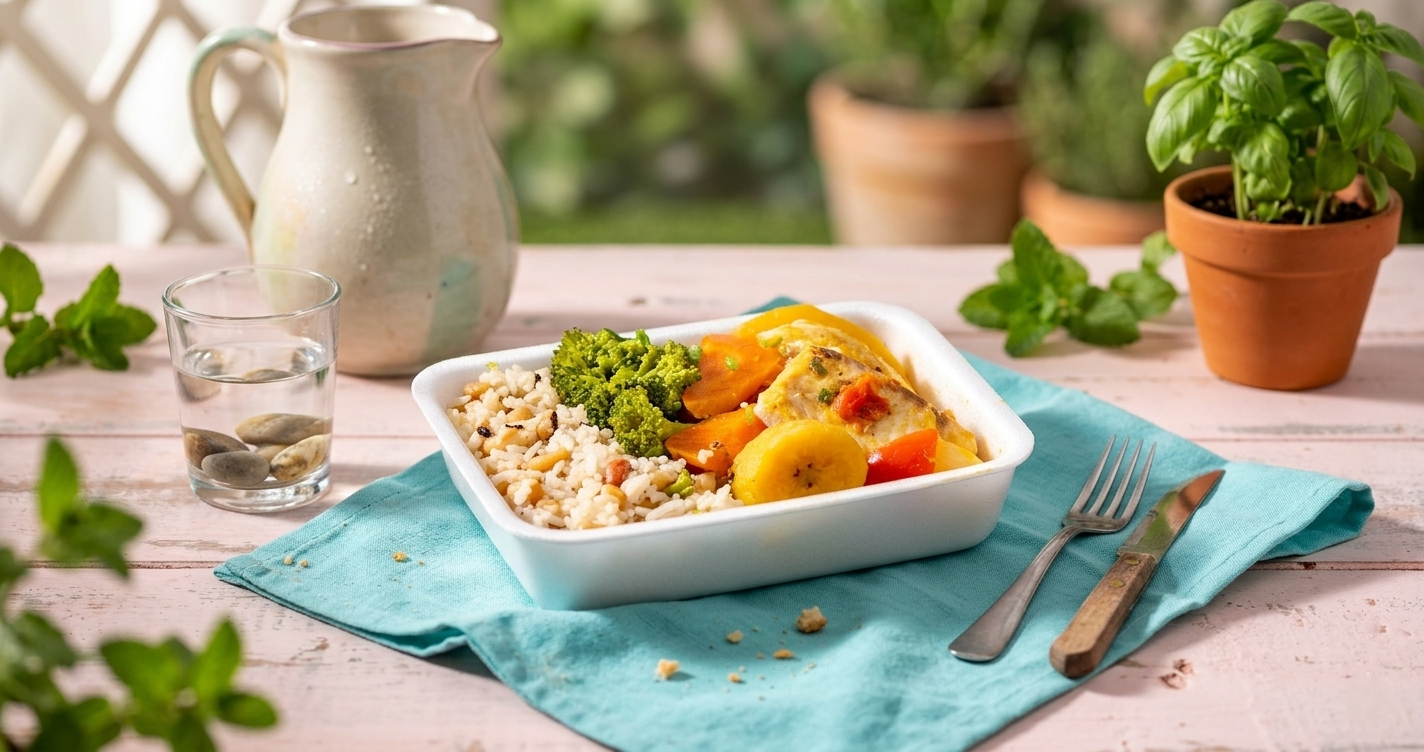
If you have found yourself in a vicious cycle of diets that don’t last, quick and non-nutritious meals, or simply a lack of time to eat well, this guide is for you. The idea of having a healthy and consistent diet may seem like a challenge, especially when your routine is hectic. However, “fit” meal prepping emerges as the perfect solution for those seeking weight loss through dietary re-education, more energy for functional home workouts, and, above all, health and longevity.
Preparing your own meals in advance is not just a trend; it is an intelligent strategy that empowers you to take the reins of your nutrition. Forget excuses and excessive spending on delivery. With the right planning and execution, fit meals will become your best allies, ensuring you always have delicious and balanced options at hand. In this complete guide, we will demystify the process, showing that it is much easier than it seems to start your journey of conscious eating.
Veja também: Carne ao Molho Branco com Aipim
Veja também: Batata Recheada com Queijo e Bacon
Why Invest in Fit Meal Prep?
The decision to prepare your meals goes far beyond mere practicality; it directly impacts several pillars of your health and well-being.
-
Dietary Re-education: Dietary re-education becomes more tangible. By cooking, you have total control over ingredients, avoiding added sugars, excess sodium, and unhealthy fats common in ready-made or restaurant meals. This makes portion control easier, a crucial factor for those seeking to shed fat and maintain an ideal weight.
-
Financial and Time Benefits: The financial aspect is undeniable; preparing meals at home is significantly more economical than eating out every day. The time saved is also a major benefit; imagine not needing to think about what to eat or cook after a long day or an intense functional training session at home. Your meals will be ready, ensuring consistency in your diet and contributing to your health and longevity.
Planning is the Key to Success
The secret to a good fit meal prep system is planning. Without it, the kitchen can become chaotic and motivation can disappear.
-
Defining Goals and Needs: Think about what you want to achieve: weight loss, muscle gain, or simply healthier eating. Consulting a nutritionist can be a fundamental step to understanding your caloric and macronutrient needs (proteins, carbohydrates, and fats). Also, consider your food preferences, allergies, and restrictions; there is no point in planning meals you do not enjoy.
-
Creating Your Weekly Menu: A good fit plate should contain:
-
Lean protein: chicken, fish, lean red meat, eggs, lentils, chickpeas.
-
Complex carbohydrates: brown rice, sweet potato, cassava, quinoa.
-
Healthy fats: olive oil, avocado, nuts (in moderation).
-
Vegetables and legumes: in abundance! Broccoli, cauliflower, carrots, zucchini, leafy greens.
-
-
Smart Shopping List: With your menu in hand, make a detailed shopping list organized by categories (produce, butcher, grocery) to optimize your supermarket trip. Prioritize fresh, seasonal foods.
Hands-On: Perfect Execution
Choose a day of the week—many prefer Sunday—to dedicate a few hours to preparing your fit meals.
-
Preparing Ingredients: Start by washing and sanitizing all vegetables and greens. Chop what is necessary and pre-cook items like grains (brown rice, quinoa) or harder vegetables (carrots, broccoli). Peel and cut proteins like chicken or fish. This initial “mise en place” stage makes all the difference in cooking agility.
-
Efficient Cooking: Optimize the use of your stove and oven. Use healthy cooking methods: baking, grilling, steaming, or sautéing with a little olive oil. Season foods well with fresh herbs, spices, garlic, and onion to add flavor without needing much salt or industrial sauces.
-
Assembling and Storing: Once everything is cooked and cooled completely, assemble the meals. Use airtight containers, preferably glass, which are safer for health and microwave-safe. Ensure the meals are cool before closing them to prevent spoilage. Perishable foods can be frozen for up to 3 months, while those to be consumed within 3–4 days can be refrigerated.
Integrating Meals into Your Active Lifestyle
Fit meals are the perfect fuel for an active lifestyle. Having nutritious meals ready ensures you will never lack energy for your functional training at home or any other physical activity. Aligning your food choices with your weight loss and training goals will lead to significant improvements in your body, disposition, and mental health.
Conclusion
Adopting the habit of fit meal prepping is an investment in yourself, your health, and your quality of life. From careful menu planning to practical execution in the kitchen and proper storage, each step contributes to more conscious and balanced eating. Remember that consistency is the key; do not get discouraged if the first attempts are not perfect. Start with small goals, experiment with new recipes, and adapt the process to your reality. In a short time, you will feel the benefits of having a controlled and nutritious diet always at hand.